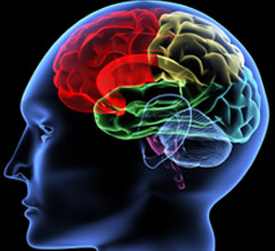
As neuroscience and neurotechnology accelerate, Georgia Tech researchers are grappling with how a neuro-connected future could reshape society - and humanity itself.
Newswise
Before the end of 2026, global attention could shift more sharply toward brain-computer interfaces, or BCIs - systems designed to allow brain signals to communicate with external devices.
Time Africa
Expanding e-commerce and personalized nutrition platforms present a US$ 10.8 billion incremental opportunity for brain health supplement manufacturers through 2033.
Persistence Market Research
The Manhattan-based non-profit research center will be devoted to becoming the world's greatest brain research, rehabilitation, recovery, human optimization and longevity institute.
City AM
The Swiss longevity clinic offers programmes including Revitalization, Master Detox, Life Reset, Brain Potential and Healthy Weight, all supported by advanced health screening and a medical team of more than 50 specialists.
HealingHolidays
Advances in energy sectors, the Internet, transportation, neuroscience and more will inevitably change the way we interact with the world around us, essentially redefining what makes us human.
Media
The connection between exercise and brain protection could provide an important clue as scientists search for evidence-based forms of physical activity that may help limit brain deterioration with age.
ScienceDaily
As digital health literacy continues expanding globally, particularly among younger, tech-savvy consumers, e-commerce-driven personalized brain health solutions are expected to unlock substantial new demand through the forecast period.
Persistence Market Research
The continued expansion of global IoT deployments toward approximately 40 billion connected devices by 2030, with sustained growth through 2026, is accelerating edge AI adoption and supporting demand for embedded AI processors and neural processing units.
MarkNtel Advisors
$95 B Neurological Therapeutics by 2029$65 B Neuroscience Tools by 20307.1% Compound Annual Growth Rate Key Growth Drivers Ageing demographics: Alzheimer's cases may more than double by 2050, ramping up demand for disease-modifying drugs-priority topic at global Neurology 2027 conference.
International Conference on Neurology and Neuroscience
EU's BCI regulation emphasizes the supremacy of human rights; it issues legislation to establish a series of rights to protect users' psychological integrity, freedom of thought and neural data rights, thus achieving comprehensive control of medical BCI risks.
PubMed Central (PMC)
As an intelligent human-machine interaction system, BCI is vulnerable to malicious cyberattacks that could result in unauthorized neural manipulation, thereby compromising individuals' autonomous decision-making.
PubMed Central (PMC)
In 2016, China promulgated the National Science and Technology Innovation Plan for the Thirteenth Five-Year Plan Period, designating Brain Science and Brain-Like Research as a major scientific and technological innovation project for 2030, marking the official launch of China's Brain Project.
PubMed Central (PMC)
While research around sports and brain impacts has tended to focus on American football, soccer players may be at risk as well.
Alzheimer's Orange County
A pioneering experimental treatment for motor neurone disease, developed by UCL spinout Trace Neuroscience, will be trialled in humans as part of a new international clinical programme.
UCL News
The next step is to better understand how PM2.5 affects depression risk by conducting long-term studies that track people over time while also measuring pollution exposure and signs of brain inflammation.
Live Science
By 2026, AI will no longer be just a tool for writing or image generation; it will become the brain operating the entire marketing ecosystem, from data analysis to process automation.
Webie Vietnam
The brain computer interface clinical trial 2026 field is splitting into minimum-intervention routes and maximal-bandwidth routes (Neuralink, Paradromics) that will not share indistinguishable safety datasets at the FDA.
Beyond Tomorrow
Last updated: 25 October 2026
Hi,
Would you like a quick online demo of our service from an experienced member of our team?