
Unveiling the Latent Power of Biomass Waste Integration in Circular Economies: A Weak Signal Reshaping Sustainable Waste Systems
Exploring biomass waste as a hidden variable in sustainable waste strategies reveals transformative implications for capital flows, regulatory design, and industry configuration. As circular economy and waste-to-energy frameworks mature, biomass-derived waste is emerging beyond conventional plastics and packaging concerns.
The integration of biomass waste conversion within circular economy supply chains presents a non-obvious weak signal that could recalibrate sustainability paradigms over the next two decades. This signal is under-recognized relative to the well-publicized plastic regulation and packaging reforms, yet it offers leverage points for systemic transformation through decentralized energy generation, regulatory realignment, and global market rebalancing. This paper evaluates how biomass waste valorization might evolve from niche to structural, influencing capital allocation, industrial strategy, and environmental governance.
Signal Identification
This development qualifies as a weak signal poised to scale into an inflection indicator within 10–20 years, with a medium plausibility band due to interdependencies on technology diffusion, policy evolution, and market acceptance. It spans critical sectors including waste management, renewable energy, agricultural supply chains, and regulatory bodies shaping circular economy policies.
The biomass waste-to-energy nexus remains peripheral in headline sustainability debates dominated by plastics and packaging reforms, although biomass consumption is forecast to grow at an 11% compound annual growth rate (CAGR) between 2026 and 2033 (Persistence Market Research 14/04/2024). This growth trajectory signals an inflection point with potential to reorganize waste valorization beyond linear end-of-life disposal.
What Is Changing
The European Union’s tightening regulations illustrate a broadening of circular economy scope. Packaging and plastics are under stricter mandates to achieve recyclability and recycled content thresholds by 2030 (Scientific Advice EU 20/03/2024). Parallelly, additive single-use plastics directives compel manufacturers to trial biodegradable polyethylene and take-back schemes for 50% waste reduction by 2027 (Mordor Intelligence 08/03/2024). Yet regulatory focus predominantly targets synthetic polymers, leaving biomass-based waste—often diffuse and decentralized—as a less-regulated domain.
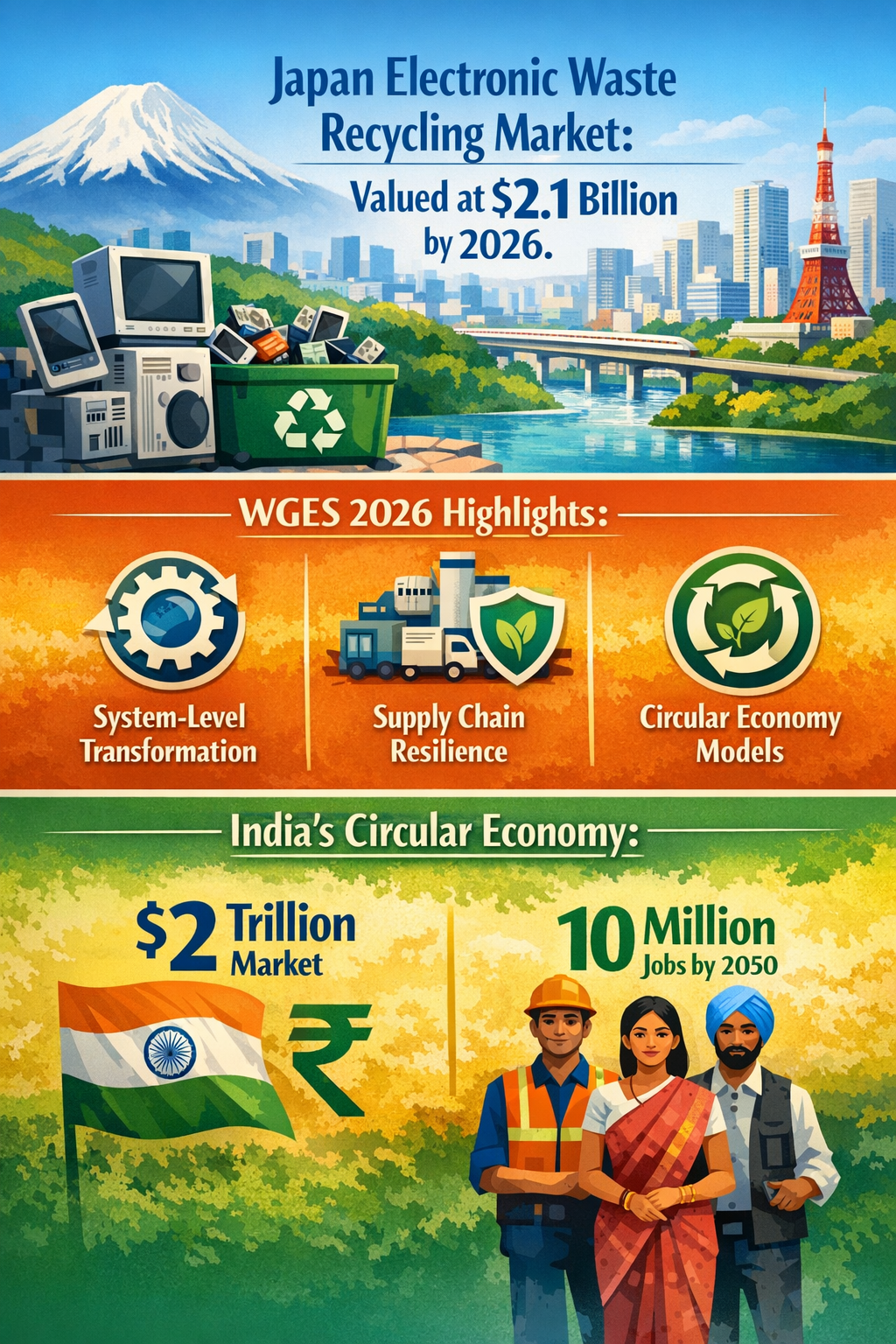
WGES 2026’s agenda emphasizes system-level transformations, advocating circular economy models aligned with supply chain resilience but largely within conventional manufacturing and packaging industries (GCC Business Watch 10/04/2024). The biomass sector’s intensifying demand, particularly in Southeast Asia and Sub-Saharan Africa, harnesses local agricultural residues to feed decentralized biomass power plants, signaling a shift from disposal to resource generation (Persistence Market Research 14/04/2024).
Importantly, the circular economy in packaging and consumer goods carries an estimated $1 trillion upside by 2030 (Persistence Market Research 22/04/2024), demonstrating the enormous financial incentive to scale circular flows. Biomass waste upstream integration could further unlock economic, environmental, and social value by creating synergies with these established circular streams.
Disruption Pathway
Biomass waste integration could accelerate structurally under conditions including: rapid technological improvements in biomass conversion efficiency; regulatory frameworks incentivizing biogenic waste valorization and renewable energy mandates; and market shifts favoring localized energy sovereignty amid global supply chain uncertainties. These drivers could converge to embed biomass waste as a critical input rather than a residual externality.
Existing linear and mono-material recycling systems may face destabilization due to competing resource flows—with biomass offering baseload reliability advantages that outcompete intermittent renewables, affecting energy market dynamics (Persistence Market Research 14/04/2024). Waste management firms could transition into energy service providers, restructuring industrial roles and precipitating cross-sector alliances.
The feedback loops arise from improving decarbonization metrics driven by biomass energy uptake, enabling regulators to tighten plastic waste restrictions even further, thereby amplifying biomass’s role as a complementary waste stream. Conversely, supply chain adaptations may prompt unintended consequences, such as biomass feedstock competition with food production or biodiversity concerns, necessitating nuanced governance.
This process may force a redefinition of dominant industry models, positioning biomass-focused organizations as pivotal in circular systems, and compelling regulatory frameworks to move beyond material-centric mandates toward integrated bio-circular resource governance.
Why This Matters
For capital allocators, recognizing biomass waste’s emerging role can redirect investments toward modular biomass power infrastructure, bio-refinery technology, and bio-waste logistics, potentially yielding higher risk-adjusted returns than traditional recycling or incineration ventures. Regulatory bodies might consider expanding circular economy policies to include biogenic waste standards, facilitating permit processes and subsidies for biomass valorization projects.
Competitive positioning implications are significant: incumbent waste management operators and utilities could lose market share if they neglect biomass capabilities, while new entrants leveraging integrated bioenergy solutions may secure strategic advantages. Supply chains incorporating biomass waste valorization could gain resilience against volatile fossil fuel prices and plastic raw material shortages.
Governance regimes will face pressure to evolve—from fragmented sectoral waste rules to harmonized bio-circular mandates encompassing environmental, social, and economic trade-offs. Liability frameworks for waste mismanagement may also extend to biomass feedstock sourcing and energy lifecycle footprints.
Implications
This weak signal might catalyze a structural transformation in how sustainable waste systems are conceived, moving from a plastics-centric circular economy to a broader bio-circular economy. Its growth could decentralize energy and waste infrastructures, prompting regulatory regimes to adapt comprehensive biomass waste standards. This evolution is likely to alter the industrial structure by merging waste management, energy generation, and agricultural sectors.
This development should not be conflated with the already well-recognized plastics and packaging regulations; it is not a mere incremental improvement in existing circular systems but an emergent systemic reconfiguration. Some may interpret biomass expansion narrowly as an energy sector issue; however, its integrative potential into circular material flows represents a distinct and under-emphasized vector of disruption.
Early Indicators to Monitor
- Increased patent filings and venture funding related to biomass waste conversion and modular bioenergy technologies.
- Public procurement initiatives favoring biomass-powered decentralized energy solutions, especially in emerging economies.
- Emergence of regulatory drafts expanding circular economy mandates to encompass biomass waste streams and sustainability criteria.
- Formation of industry consortia or standards bodies focused on bio-circular resource management.
- Capital allocation shifts in waste-to-energy versus traditional recycling infrastructure projects.
Disconfirming Signals
- Prolonged technological stagnation or cost increases in biomass conversion efficiency limiting competitive viability.
- Deterioration or rollback of regulatory incentives for biomass waste valorization as plastics recycling takes precedence.
- Significant ecological or social backlash against biomass feedstock sourcing undermining public and investor support.
- Stagnation or contraction of decentralized biomass power markets, especially in key growth regions such as Southeast Asia and Sub-Saharan Africa.
- Dominance of alternative renewable strategies (e.g., green hydrogen, battery storage) marginalizing biomass adoption in circular economy frameworks.
Strategic Questions
- How should regulatory frameworks be adjusted to integrate biomass waste streams within circular economy mandates without compromising ecosystem integrity?
- What strategic partnerships or industrial realignments could accelerate the deployment of biomass waste-to-energy solutions as a core sustainability pillar?
Keywords
Biomass; Circular Economy; Waste-to-Energy; Sustainable Waste; Regulatory Frameworks; Decentralized Power; Capital Allocation; Industrial Strategy; Renewable Energy; System-Level Transformation
Bibliography
- System-level transformation will feature prominently at WGES 2026, with supply chain resilience and circular economy models gaining importance across multiple industries. GCC Business Watch. Published 10/04/2024.
- The Circular Economy for Plastics proposed a Packaging and Packaging Waste Regulation effective as of 2025 (Regulation 2025/40, 2024) that requires all packaging (including plastic) to be recyclable or reusable by 2030, and to set recycled content targets for plastics. Scientific Advice EU. Published 20/03/2024.
- The European Union updated its Single-Use Plastics Directive in 2024, compelling manufacturers to trial biodegradable polyethylene and to implement take-back schemes to achieve 50% waste reduction by 2027. Mordor Intelligence. Published 08/03/2024.
- The circular economy in packaging and consumer goods could generate $1 trillion in economic benefits globally by 2030. Persistence Market Research. Published 22/04/2024.
- Fast-Growing Segment: Biomass power is forecast at a 11% CAGR (2026-2033), driven by baseload reliability advantages, waste-to-energy synergies, and robust demand in biomass-rich markets across Southeast Asia and Sub-Saharan Africa. Persistence Market Research. Published 14/04/2024.