
Grid-Decarbonization as the Hidden Bottleneck Threatening Green Hydrogen’s Role in the Energy Transition
This paper explores the under-recognized systemic risk that incomplete power sector decarbonization poses to scaling green hydrogen as a cornerstone fuel in net-zero pathways. Rather than focusing on green hydrogen’s well-publicized technology or cost challenges, it reveals how slow grid decarbonization could structurally undercut the fuel’s sustainability claims and capital flows.
Green hydrogen offers promise as a clean fuel for hard-to-abate sectors, but this promise crucially depends on the carbon intensity of the electricity used for electrolysis. Unless power grids rapidly transition to near-zero carbon, green hydrogen production risks perpetuating fossil emissions and invites regulatory backlash. This weak yet critical signal intersects energy infrastructure, investment risk, and industrial strategy with a 10–20 year horizon. Recognition and proactive management could reshape capital allocation, regulatory frameworks, and industrial value chains, while neglecting it risks stranded assets and policy incoherence.
Signal Identification
This development qualifies as a weak signal with emerging inflection potential. While green hydrogen’s role in net-zero strategies is broadly accepted and promoted, awareness that grid emissions intensity is a decisive and often underestimated factor remains limited among investors, regulators, and industrial stakeholders.
Its relevance extends over the medium to longer term (10–20 years) because hydrogen infrastructure build-out and industry roadmaps are typically multi-decadal. The plausibility band is medium to high given current trajectories of power sector decarbonization vary widely across regions, and rapid scaling of green hydrogen is forecast but not yet embedded universally. Key exposed sectors include power generation, hydrogen production and usage, heavy industry, transportation, and associated regulatory frameworks.
What Is Changing
The green hydrogen narrative centers on its potential to decarbonize transportation, power generation, and industry (Hydrogen as key to carbon neutrality by 2050). However, studies caution that green hydrogen may fail as a sustainable fuel unless the energy supply chain undergoes a thorough overhaul emphasizing grid decarbonization (Sheffield University 12/03/2026).
This condition arises because electrolysis—the main method to produce green hydrogen—requires vast amounts of clean electricity. If grid power derives from fossil fuels, the carbon footprint of hydrogen production effectively transfers the emissions upstream rather than eliminating them.
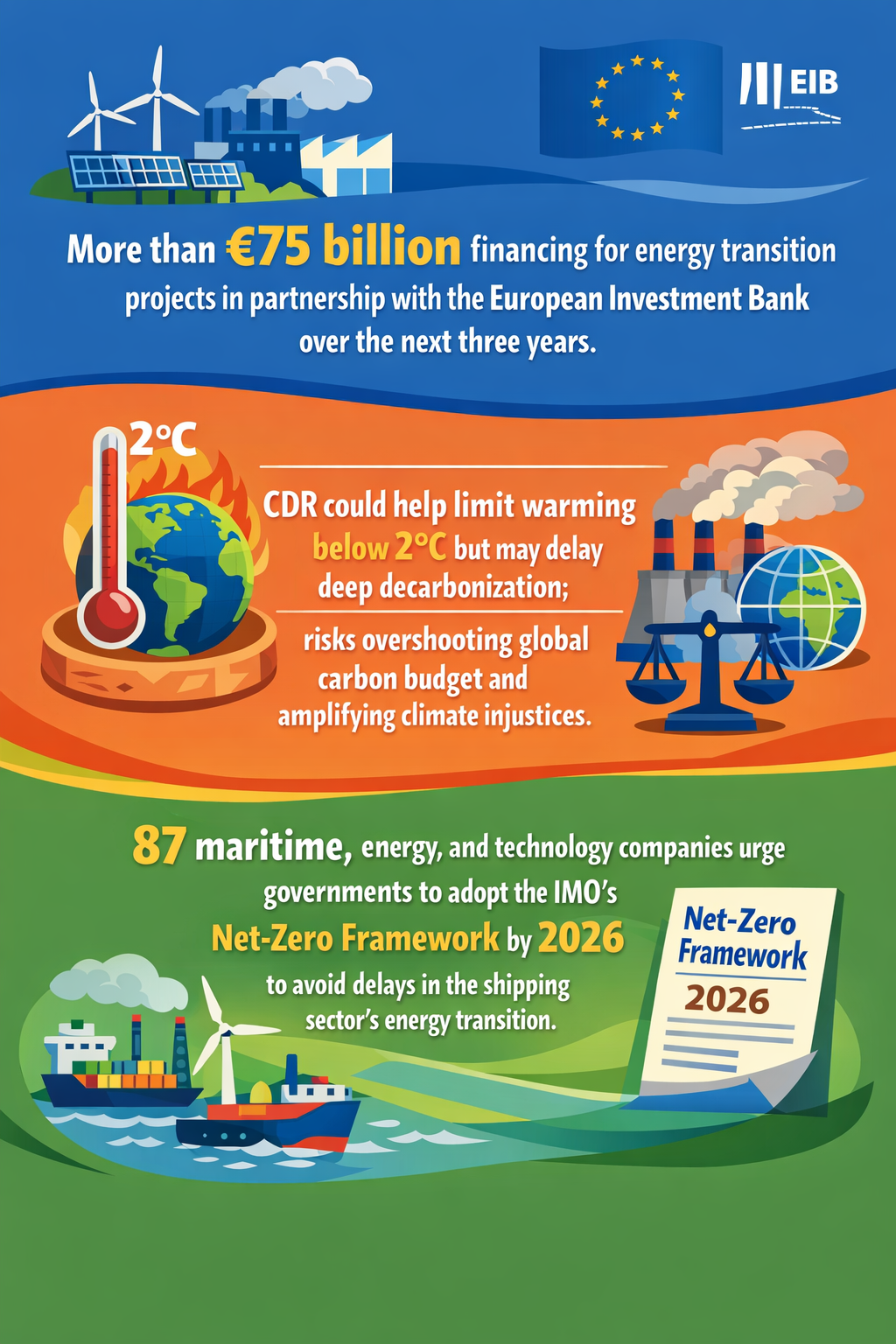
Meanwhile, emerging investment frameworks highlight the need for concerted, coordinated capital flows into both green hydrogen assets and grid infrastructure (European Commission 10/03/2026). The European Investment Bank’s €75 billion financing initiative aims to simultaneously target clean energy investments and hydrogen projects, signaling awareness yet also revealing the scale of financial re-balancing needed.
Concurrently, other analyses highlight that energy transition pathways vary drastically in resource demand, notably lithium supplies for batteries, which are intertwined with renewable electricity expansion, a prerequisite to clean hydrogen scaling (MetalTech News 04/03/2026>). Without addressing grid emissions first, the industry could face paradoxical outcomes.
Further, regulatory and industrial coalitions stress the need for value-chain collaboration on decarbonization, suggesting that fragmented efforts could stall green hydrogen deployment or cause disjointed outcomes (EDIE 15/03/2026).
In essence, decarbonizing the grid is not ancillary but a core precondition for green hydrogen’s sustainable scaling—an insight underappreciated in the broader discourse, which often treats hydrogen and power sectors separately.
Disruption Pathway
The evolution of this signal into structural change hinges on how effectively power sector emissions are reduced in jurisdictions targeting green hydrogen deployments. If grids remain fossil-intensive, hydrogen producers may face regulatory restrictions or certification challenges as product carbon footprints come under scrutiny.
Initially, this could accelerate capital shifts away from pure-play green hydrogen infrastructure toward integrated renewable power assets or alternative hydrogen production routes (e.g., blue hydrogen with carbon capture, albeit with tradeoffs). It could also spur innovation in grid technologies, storage, and demand management to better meet the massive electricity demand that large-scale hydrogen production imposes.
Conversely, slow grid decarbonization may impose stresses by reducing the net emissions benefit of hydrogen, undermining investor confidence and causing policy makers to revise renewable portfolio standards and hydrogen incentives. This could introduce a feedback loop where green hydrogen plants become stranded assets due to carbon leakage concerns and regulatory tightening.
Structural adaptations could involve new regulatory frameworks mandating life-cycle emissions accounting, stronger grid emissions targets ahead of hydrogen project approvals, or combined investment mandates for grid and hydrogen in energy transition plans.
Unintended consequences might include accelerated deployment of alternative decarbonization strategies where grid decarbonization lags, such as electrification via battery technologies, or increased emphasis on natural gas reforming with carbon capture (blue hydrogen) as an interim measure.
Overall, the interplay of technological, regulatory, and capital markets forces could shift dominant industrial models from siloed hydrogen production toward integrated, systemic decarbonization platforms encompassing power generation, grid management, and hydrogen value chains.
Why This Matters
For senior decision-makers, this signal is critical because it directly impacts multi-hundred-billion capital allocation streams toward hydrogen and power infrastructure. Misjudging the interdependence between grid decarbonization and hydrogen sustainability risks misdeploying capital into assets that fail compliance or fail to deliver net-zero outcomes.
Regulators must understand this dynamic to design coherent policies that incentivize both sectors in tandem rather than creating perverse incentives that encourage scaling hydrogen on “dirty” grids, undermining climate targets.
Industrial strategists must anticipate shifts in supply chains and the relative attractiveness of different hydrogen production modalities based on grid readiness. This understanding influences partnerships, technology investments, and long-term positioning in the evolving energy ecosystem.
The signal also has repercussions for governance and liability frameworks: calculating embodied emissions across power and hydrogen sectors becomes essential for accurate carbon accounting and for defining decarbonization responsibility along integrated value chains.
Implications
This systemic insight into grid decarbonization as a bottleneck may prompt investors to prioritize renewable energy and grid upgrades alongside or even ahead of green hydrogen facilities. It could lead regulators to tighten carbon intensity thresholds for qualifying hydrogen as “green” or eligible for subsidies.
Over the next 10–20 years, this may structurally alter industrial organization, favoring vertically integrated utilities and hydrogen producers partnering to optimize power source emissions and grid capacity utilization.
However, it is important to distinguish this development from transient noise around hydrogen hype or cost fluctuations. Unlike short-term price dips or supply chain shocks, the grid-hydrogen interdependency represents a fundamental structural condition for sustainable decarbonization.
Competing interpretations might posit that grid decarbonization will accelerate sufficiently due to falling costs and electrification trends, rendering this signal less constraining. Alternatively, some may argue that blue hydrogen or other alternatives could substitute in the medium term.
Nevertheless, the conditionality of hydrogen’s green credentials on grid emissions remains a decisive factor shaping long-term risk, regulation, and strategy, warranting greater attention and integrated planning.
Early Indicators to Monitor
- Regulatory announcements establishing carbon intensity thresholds linking hydrogen certification to grid emissions intensity
- Capital deployment patterns showing co-investment in renewable generation and green hydrogen plants
- Standards development around lifecycle emissions accounting integrating power generation and hydrogen production
- Technology patent filings focused on power-to-hydrogen grid integration, smart grid solutions, and emission monitoring
- Supply chain reports tracking mismatches between hydrogen project growth and renewable power buildout
Disconfirming Signals
- Rapid grid decarbonization progress universally surpassing hydrogen scaling timelines, removing emissions bottlenecks
- Regulatory frameworks allowing hydrogen production on fossil-heavy grids without carbon penalty or restrictions
- Breakthroughs in low-carbon hydrogen production independent of grid emissions, e.g., direct solar-driven electrolysis or novel catalysts reducing electricity demand
- Market preference for alternative fuels or technologies diminishing green hydrogen’s prominence
Strategic Questions
- How can investment strategies in green hydrogen be integrated with power grid decarbonization efforts to avoid stranded assets and optimize lifecycle emissions?
- What regulatory frameworks should be prioritized to ensure green hydrogen certifications accurately reflect upstream grid emissions?
Keywords
Green hydrogen; Energy grid decarbonization; Electrolysis emissions; Stranded assets; Carbon intensity certification; Investment strategy; Regulatory frameworks; Supply chain risk
Bibliography
- Green hydrogen - the cornerstone of net zero strategies around the world - could fail in becoming a truly sustainable fuel unless countries rapidly decarbonise their energy grids. Sheffield University. Published 12/03/2026.
- Delivering the clean energy transition will require €660 billion of investment annually until 2030, rising to €695 billion between 2031 and 2040. European Commission. Published 10/03/2026.
- Depending on how aggressively the energy transition plays out, Wood Mackenzie forecasts that lithium demand will be somewhere between 5.6 million and 13.2 million metric tons by 2050 - a 373% to 880% increase over 2025 levels. MetalTech News. Published 04/03/2026.
- Developed by BEAMA, the UK's trade association for manufacturers in the electrotechnical sector, the new 2050 Connected Climate Commitment aims to enhance value chain collaboration on decarbonization and responsible resource use. EDIE. Published 15/03/2026.
- A new Clean Energy Investment Strategy will be delivered in partnership with the European Investment Bank which intends to deliver more than €75 billion of financing over the next three years for energy transition projects. Neutron Bytes. Published 15/03/2026.