
AI-Driven Energy Demand Burden: An Under-Recognized Inflection in the Clean Energy Transition
An emerging inflection point threatens to disrupt the trajectory of the global clean energy transition: the rapidly escalating energy consumption of artificial intelligence (AI) applications. While AI is heralded as a critical enabler for decarbonization, its own growing power draw risks creating systemic friction in renewable energy scale-up and capital allocation, with profound structural ramifications over the next 10–20 years.
This insight paper identifies the intensifying energy demands of AI systems—often unseen in mainstream foresight—as a plausibly game-changing weak signal. Under-recognized in policy and investment circles, AI’s energy footprint intersects critically with renewable energy supply chains, grid infrastructure, and industrial decarbonization strategies. Unpacking this development reveals a paradox: AI’s potential as a decarbonization enabler may be simultaneously undermining the renewable energy transition’s pace and economics in ways that could reshape regulatory frameworks, capital deployment priorities, and industrial structures across energy and technology sectors.
Signal Identification
This development qualifies as an emerging inflection. It signals a non-linear convergence of two exponential trajectories—renewable energy supply growth and AI-related electricity consumption—that could alter system-wide energy dynamics.
The time horizon is medium-to-long term (10–20 years), given the compounding growth rates projected for AI workloads and renewables deployment. The plausibility band is high, grounded in current empirical trends and technological roadmaps. Sectors exposed span digital infrastructure (data centers, cloud computing), electricity generation and grid operations, industrial energy use, hydrogen production, and regulatory bodies overseeing emissions and energy markets.
What Is Changing
Across the referenced materials, AI’s role in the energy transition is widely acknowledged but narrowly framed as an efficiency or digital decarbonization tool (FactMR 07/05/2026; Thinking Inc 04/05/2026). Yet less examined is the scale of AI’s own energy demands, which are rapidly escalating as models grow more complex and data centers expand worldwide.
This creates a duality where AI-enabled ‘digital carbon tracking’ and ‘Industry 4.0’ initiatives (FactMR 07/05/2026) are ushering in decarbonization at scale, but simultaneously generating an unprecedented load on power grids. The “collision between the clashing exponential curves of renewable energy supply and AI energy demands” aptly summarizes this under-recognized tension that may determine whether renewable transitions succeed or stall (Scientific American 05/05/2026).
Notably, renewable infrastructure projects like the SunZia wind and transmission initiative in the US Southwest signal how AI data centers may paradoxically accelerate renewables, incentivizing grid upgrades and transmission expansion (Green Prophet 12/05/2026). However, this dynamic could impose new stresses on supply chains for critical inputs such as aluminum, where prices are already tightening due to concurrent geopolitical and ESG pressures (PricePedia 07/04/2026).
The energy transition’s broader industrial dimension is further complicated by workforce shortages in skilled trades critical to grid modernization, such as electricians, whose gap is exacerbated by rapid infrastructure expansion to meet AI and EV charging demands (American Bazaar Online 02/05/2026). Meanwhile, burgeoning electrolyzer deployment for green hydrogen—expected to reach 10 GW capacity in Germany by 2030 (Precedence Research 03/05/2026)—illustrates a sector where AI load demands and renewable inputs overlap, adding complexity to grid balancing and decarbonization pathways (IndexBox 10/03/2026).
Financially, the staggering projected average annual investment in energy transition of $2.9 trillion (Climate & Capital Media 01/05/2026) could be rerouted or redirected as capital allocators grapple with AI’s energy footprint undermining traditional renewable project economics or necessitating priority for grid resilience and digital infrastructure upgrades. Regulatory frameworks—such as Europe’s Emissions Trading System—face pressure to adapt auction mechanisms so that revenues from allowances finance technology transitions that factor in these emerging load profiles (Bruegel 25/04/2026).
Disruption Pathway
This inflection may evolve structurally if AI-driven energy demands significantly outpace renewable energy capacity growth, triggering a series of cascading effects.
Initially, accelerated AI adoption fueled by Industry 4.0 and digital carbon management solutions (FactMR 07/05/2026) will intensify data center build-outs and increase electricity use considerably. This growth may stress electricity grids already strained by electrification trends related to EV charging and hydrogen production (American Bazaar Online 02/05/2026; Precedence Research 03/05/2026).
Grid congestion and supply bottlenecks could prompt utilities and regulators to enforce stricter energy allocation frameworks, prioritizing reliability and flexibility over capacity expansion. Carbon markets may evolve to reflect differential pricing for AI-intensive demand sectors, reshaping industrial competitiveness and potentially prompting relocation or capital flight from carbon-constrained jurisdictions (Bruegel 25/04/2026).
Such stresses may accelerate investments in grid-edge technologies, energy storage innovations, and sector coupling solutions to accommodate AI loads while supporting intermittent renewables. However, this could amplify supply chain pressures on critical metals and materials, complicating cost structures (PricePedia 07/04/2026).
Feedback loops may emerge where increasing capital requirements and complexity slow renewable project development cycles, creating a nascent “AI energy consumption paradox.” Corporations might reconsider pursuing AI-led decarbonization strategies if their indirect energy cost premiums escalate disproportionally.
Consequently, legacy energy incumbents and new players focused on digital-energy convergence could redefine the industrial landscape, holding disproportionate sway in energy markets and regulatory discourse. Government policy may pivot to incentivize AI energy efficiency aggressively, embedding energy consumption metrics into technology approval and funding criteria (KPMG 15/05/2026).
Why This Matters
For senior decision-makers, this signal highlights an emerging capital allocation inflection where traditional clean energy investments could compete against escalating digital energy infrastructure needs.
Regulators face a complex mandate to simultaneously accelerate renewable deployment, maintain system stability, and integrate exponentially growing AI loads, challenging existing grid codes and market designs.
Strategically, industries deploying AI at scale may encounter rising operational costs and reputational risks if their digital footprints are viewed as undermining decarbonization objectives. Supply chains, especially for critical minerals and grid components, could experience volatility requiring new sourcing and stockpiling models.
Governance structures may need reconfiguration to bridge energy and digital policymaking siloes, integrating carbon pricing, grid regulation, and technology approval into coherent frameworks that address AI’s unique systemic impact.
Implications
The convergence of AI energy demands with renewable energy scale-up could likely redefine priorities for energy transition investments, channeling more capital into flexible grid technologies and energy-efficient AI hardware rather than solely expanding renewable generation capacity.
Capital markets might increasingly integrate digital energy consumption metrics into ESG (environmental, social, governance) assessments and financing approvals, shaping strategic positioning for incumbents and entrants alike.
This is not a transient effect caused by immature AI deployment models but potentially a structural challenge emerging from AI’s inherent energy intensity and growth trajectory.
Alternative interpretations could see AI energy demands as a manageable incremental burden mitigated by technological breakthroughs in computing efficiency or advanced grid architectures. However, current trends suggest these countermeasures may not scale fast enough to prevent systemic impacts.
Early Indicators to Monitor
- Trends in electricity consumption growth rates at hyperscale AI data centers globally.
- Capital expenditure shifts from renewable generation alone toward grid infrastructure and digital-energy convergence projects.
- Regulatory drafts imposing energy consumption or carbon intensity limits specifically targeting data centers and AI hardware.
- Venture funding clustering in energy-efficient AI chip design and related technologies.
- Emergence of carbon pricing mechanisms differentiated by technology-specific electricity intensities.
Disconfirming Signals
- Significant (>50%) gains in AI hardware energy efficiency outpacing workload growth for sustained multi-year periods.
- Rapid breakthroughs in grid-scale, cost-competitive energy storage or dispatchable renewables that fully absorb AI load increments without systemic stress.
- Regulators adopting uniform decarbonization mandates without adapting for AI load considerations, coupled with meaningful AI energy demand stagnation or decline.
Strategic Questions
- How can capital deployment balance investment between expanding renewable capacity and upgrading grid infrastructure to accommodate AI energy load growth?
- What regulatory measures might best incentivize the design and deployment of energy-efficient AI technologies without stifling innovation?
Keywords
AI energy consumption; renewable energy transition; digital decarbonization; energy grid infrastructure; carbon pricing; energy transition investment; hydrogen electrolyzer; critical minerals; ESG investing; data centers
Bibliography
- Irish energy business leaders are optimistic about the potential of AI to drive the clean energy transition. KPMG Ireland. Published 15/05/2026.
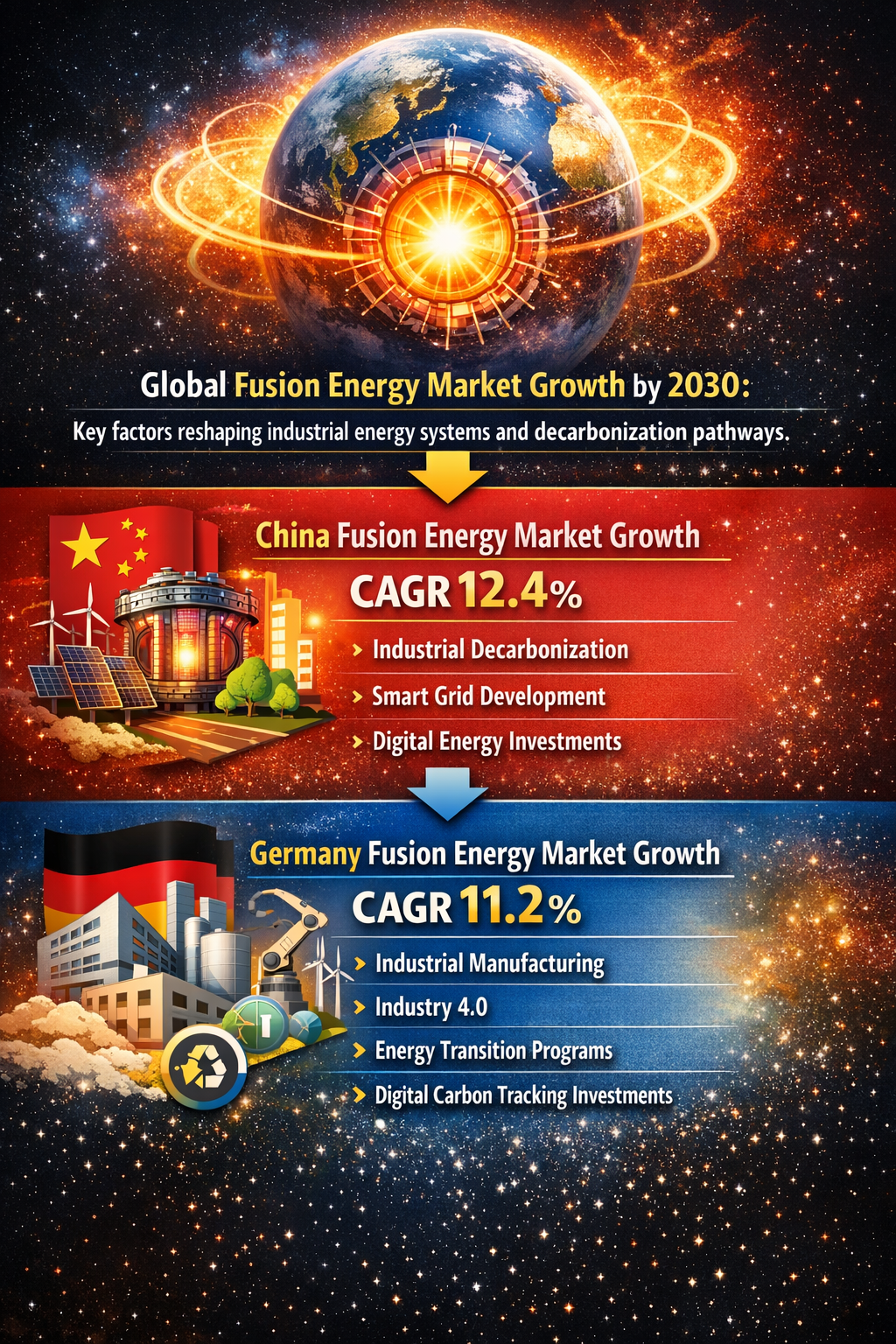
- Demand in Germany is projected to grow at a CAGR of around 11.2%, supported by its strong industrial manufacturing base, leadership in Industry 4.0 initiatives, energy transition programs, and rising investments in digital carbon tracking systems. FactMR. Published 07/05/2026.
- 40% of the energy sector's decarbonization targets for 2030 depend on digital technologies, making AI a critical pathway - not an optional efficiency play. Thinking Inc. Published 04/05/2026.
- The collision between the clashing exponential curves of renewable energy supply and AI energy demands will determine not just the trajectory of the global energy system but whether the renewable energy transition succeeds before another technology consumption binge derails it entirely. Scientific American. Published 05/05/2026.
- Renewable energy projects like SunZia - the giant new wind and transmission project connecting New Mexico wind power to California - may show how the AI boom could also accelerate the renewable energy transition. Green Prophet. Published 12/05/2026.
- By 2030, Germany aims to achieve 10 GW of electrolyzer capacity, marking a significant step toward decarbonizing its hydrogen sector. Precedence Research. Published 03/05/2026.
- Bloomberg projects an average annual investment in the global energy transition of $2.9 trillion over the next five years. Climate & Capital Media. Published 01/05/2026.
- The electrician shortage is projected to worsen through 2026, with over 80K new positions expected nationally, driven by aging infrastructure, EV charging networks, and the energy transition. American Bazaar Online. Published 02/05/2026.
- The additional revenues from an increased share of auctioned allowances could meet the investment needs of carbon-intensive industries, thereby fostering the clean industrial transformation Europe needs to meet its competitiveness, security and decarbonization objectives. Bruegel. Published 25/04/2026.
- In the article LME aluminium price forecast 2026-2027, the outlook for aluminum price growth was already highlighted, supported by the energy transition, production limits imposed by China, and the progressive strengthening of the Chinese ETS system. PricePedia. Published 07/04/2026.